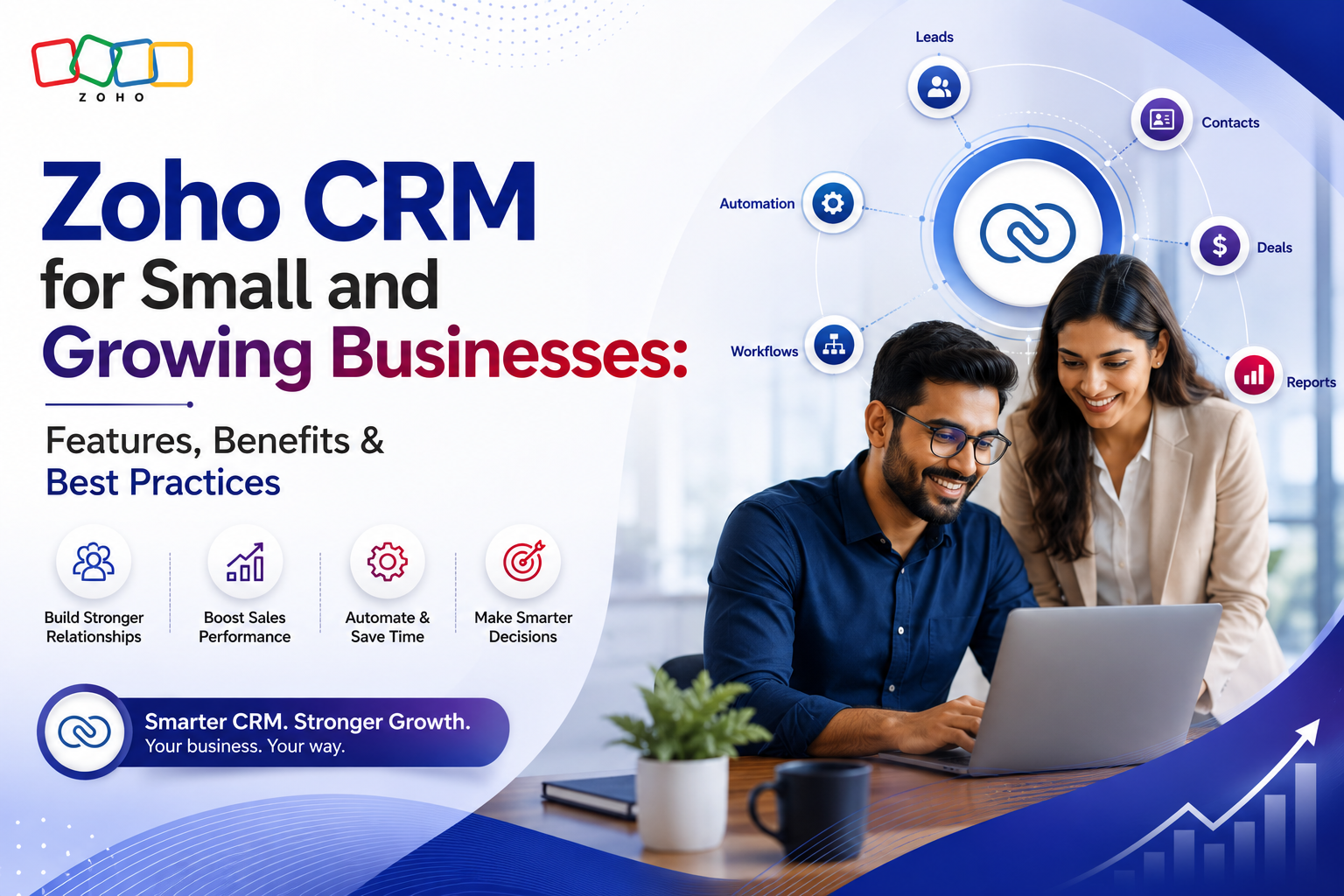
Zoho CRM for Small and Growing Businesses: Features, Benefits & Best Practices
Managing customer relationships becomes increasingly difficult as a business grows. Leads arrive through multiple channels, sales teams need better pipeline visibility, and customer information can become scattered across spreadsheets and disconnected tools.
Zoho CRM provides businesses with a centralized platform for managing customer relationships, sales activities, workflows, and business data.
1. What Is Zoho CRM?
Zoho CRM is a cloud-based customer relationship management platform designed to help businesses manage their sales and customer processes.
It can help organizations manage:
-
Leads
-
Contacts
-
Accounts
-
Deals
-
Sales pipelines
-
Customer interactions
-
Tasks and activities
-
Reports and analytics
2. Why Businesses Choose Zoho CRM
Centralized Customer Data
Sales teams can maintain customer information in one centralized environment.
Better Lead Management
Businesses can capture, organize, qualify, and track leads throughout the sales cycle.
Sales Pipeline Visibility
Teams can understand where opportunities stand and identify deals that need attention.
Workflow Automation
Routine tasks and business processes can be automated to reduce manual effort.
Reporting & Analytics
Managers can use CRM reports to understand sales performance and identify trends.
3. Zoho CRM Integration
Zoho CRM becomes even more useful when connected with other business applications.
Common integration scenarios include:
-
Email platforms
-
Marketing applications
-
Websites
-
Accounting systems
-
Customer support platforms
-
Third-party applications
-
Custom APIs
4. Best Practices for Zoho CRM
Businesses should:
-
Define their sales process before configuration.
-
Keep customer data clean.
-
Establish clear user roles and permissions.
-
Automate repetitive workflows.
-
Build useful reports and dashboards.
-
Train users properly.
-
Review the CRM regularly as the business evolves.
5. When Should You Implement Zoho CRM?
Zoho CRM can be particularly useful when spreadsheets and disconnected applications make it difficult to track customers, sales opportunities, and business activities.
A structured CRM can give growing teams the visibility and automation needed to scale their sales operations.
Conclusion
Zoho CRM can provide growing businesses with a centralized foundation for customer management, sales visibility, automation, and reporting.
The real value comes from implementing and customizing the CRM around the organization's actual sales process rather than simply activating the software.