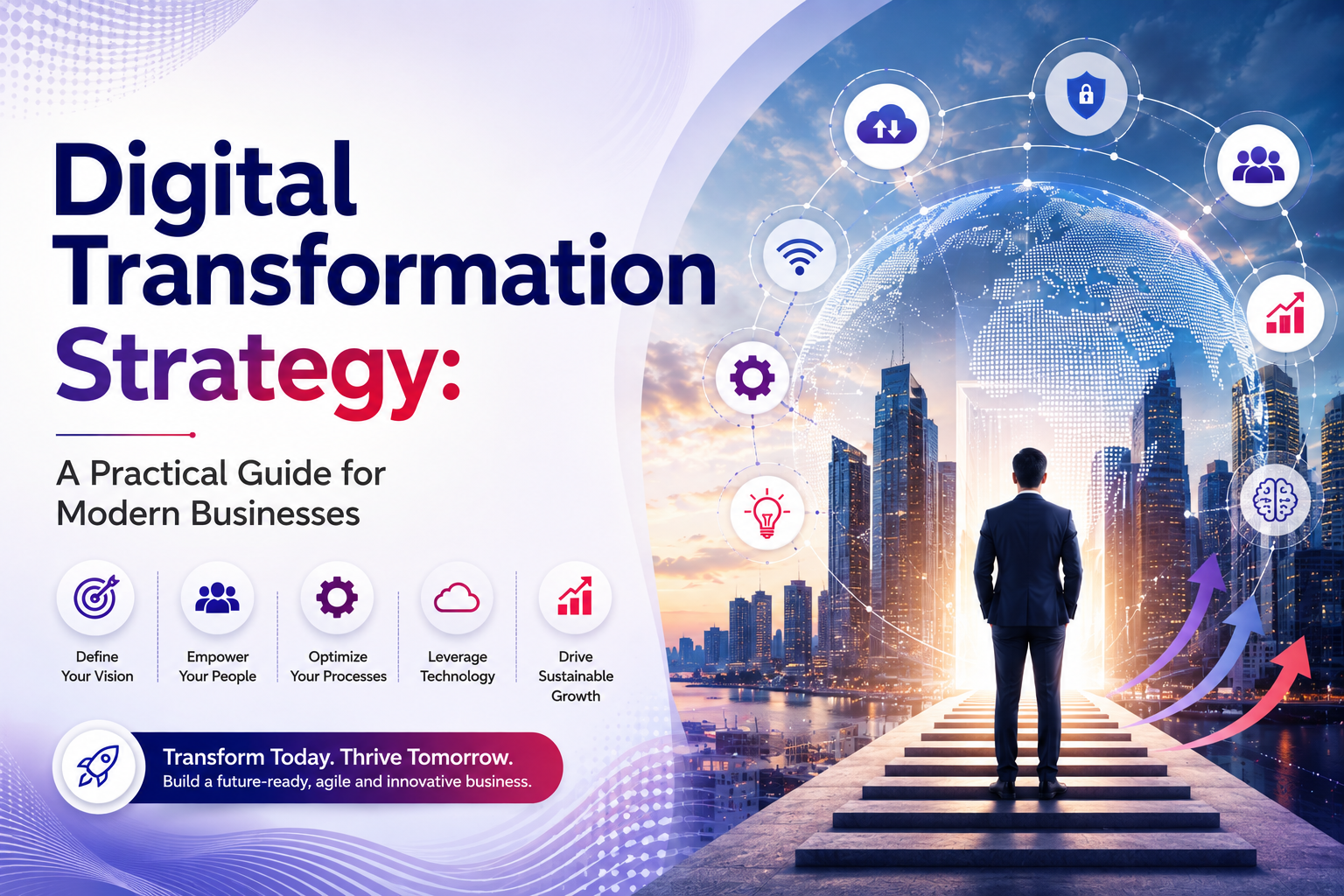
Digital Transformation Strategy: A Practical Guide for Modern Businesses
Digital transformation is no longer limited to replacing old software with new technology. For modern businesses, it involves rethinking processes, customer experiences, data, technology, and operating models.
A successful transformation connects technology investments to measurable business outcomes.
1. What Is Digital Transformation?
Digital transformation is the process of using modern technologies and digital strategies to improve how an organization operates and delivers value to customers.
It may involve:
-
Cloud adoption
-
Business process automation
-
AI and machine learning
-
Data and analytics
-
Application modernization
-
System integration
-
Digital customer experiences
2. Why Businesses Need a Strategy
Technology adoption without a clear strategy can create more complexity.
A transformation strategy helps businesses determine:
-
What should be modernized?
-
Which processes should be automated?
-
Which systems should be integrated?
-
Where should cloud technologies be introduced?
-
How can data improve decision-making?
3. Key Steps in Digital Transformation
Assess the Current Environment
Understand existing systems, processes, technology gaps, and operational challenges.
Define Business Goals
Identify measurable objectives such as reducing operational costs, improving customer experience, or increasing productivity.
Prioritize Initiatives
Not every system needs to be transformed simultaneously. Prioritize initiatives based on business impact and feasibility.
Modernize and Integrate
Modernize legacy systems where necessary and connect applications through APIs and integration platforms.
Enable Automation
Automate repetitive processes to reduce manual work and improve efficiency.
Measure Results
Track KPIs and continuously evaluate whether transformation initiatives are producing measurable business value.
4. Common Challenges
Organizations may face:
-
Resistance to change
-
Legacy technology
-
Data silos
-
Integration complexity
-
Skills gaps
-
Budget constraints
-
Poor adoption
Transformation programs should address people and processes alongside technology.
Conclusion
Digital transformation is a continuous journey rather than a one-time technology project.
Businesses that combine a clear strategy with modernization, integration, automation, and strong change management can create more agile and resilient operations.
The right transformation strategy turns technology investment into measurable business progress.